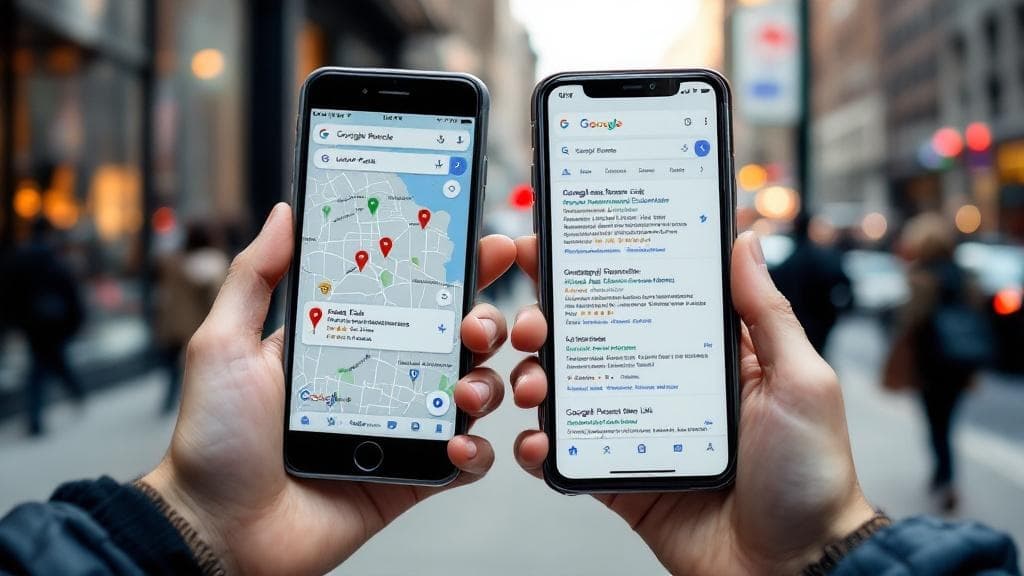
One of the most common points of confusion for business owners investing in search engine optimization is the difference between local SEO and organic SEO. They are related, they share some common principles, but they are fundamentally different disciplines targeting different types of search results with different ranking algorithms. Understanding the distinction is essential to allocating your marketing budget effectively and choosing the right local SEO services for your goals.
This guide breaks down the differences clearly, explains when you need one versus the other, and shows how the two work together.
The Fundamental Difference
Organic SEO optimizes your website to rank in Google's standard, non-localized search results — often called the "ten blue links." These results are determined by content relevance, backlink authority, and technical website factors. They are the same (or very similar) regardless of where the searcher is located.
Local SEO optimizes your business to rank in geographically filtered search results — the local pack (map results), Google Maps, and localized organic listings. These results change dramatically based on the searcher's physical location or the geographic term in their query.
The algorithms that determine these two types of rankings are distinct. Google uses different signals, different weighting, and different data sources for each.
Where Results Appear
Organic Results
Organic results appear as standard website listings in Google's search results. They consist of a title tag, URL, and meta description. They can appear for any type of query — informational ("how to file a tax extension"), commercial ("best project management software"), or navigational ("Home Depot website").
Organic results are not filtered by location for non-local queries. A well-optimized blog post can rank nationally or globally.
Local Results
Local results appear in three primary formats:
The Local Pack: A map with three business listings that appears prominently near the top of search results for queries with local intent. Each listing pulls data from Google Business Profile, not the business website.
Google Maps: When users search within Google Maps, an entirely separate results set appears. These are pure local results influenced heavily by proximity.
Localized Organic Results: Standard organic results that Google filters for geographic relevance. A search for "personal injury lawyer Houston" shows organic results with a local bias — Houston-area law firm websites rank, while firms in other cities do not.
Ranking Factors: Side-by-Side Comparison
The ranking factors for local and organic SEO overlap in some areas but diverge significantly in others.
Top Local Pack Ranking Factors
According to research from Whitespark's annual Local Search Ranking Factors survey, the top factors for local pack rankings are:
- Google Business Profile signals (categories, completeness, keywords in business description, photos, posts) — ~32% of influence
- Review signals (quantity, velocity, diversity, response rate) — ~16%
- On-page signals (NAP consistency, local keywords, location pages) — ~14%
- Link signals (local link authority, domain authority) — ~11%
- Behavioral signals (click-through rate, calls, direction requests) — ~8%
- Citation signals (NAP consistency across directories, citation volume) — ~7%
- Personalization (searcher proximity to business) — ~7%
Notice that your Google Business Profile — a property external to your website — is the single largest factor. This is a fundamental difference from organic SEO.
Top Organic Ranking Factors
Organic rankings are determined by a different set of signals:
- Content relevance and quality — comprehensive, well-structured content that matches search intent
- Backlink profile — the number and quality of websites linking to your page
- Technical SEO — page speed, mobile-friendliness, Core Web Vitals, crawlability
- Domain authority — the overall trust and authority of your domain
- User engagement — bounce rate, time on page, pogo-sticking
- Content freshness — how recently content was published or updated
- Topical authority — how comprehensively your site covers a topic area
Google Business Profile plays zero role in organic rankings. Reviews play zero role. Citations play zero role. These are purely local factors.
Conversely, content depth and topical authority — the dominant organic factors — play a supporting but secondary role in local pack rankings.
Strategy Differences
Local SEO Strategy Focuses On:
- Optimizing and managing your Google Business Profile
- Building and maintaining accurate citations across directories
- Generating and responding to customer reviews systematically
- Creating location-specific landing pages on your website
- Implementing LocalBusiness schema markup
- Building links from locally relevant websites
- Managing your online reputation through review management and response strategy
Organic SEO Strategy Focuses On:
- Creating in-depth, authoritative content that matches search intent
- Building a strong backlink profile through link building and digital PR
- Optimizing technical performance (speed, crawlability, Core Web Vitals)
- Structuring your site architecture and internal linking
- Targeting keyword opportunities through comprehensive content strategy
- Earning featured snippets and other SERP features
When You Need Local SEO
You need local SEO if your business serves customers in a specific geographic area and you want those customers to find you when they search for your type of service. This applies to:
- Any business with a physical location that customers visit
- Service-area businesses that travel to customer locations
- Professional services targeting a specific metro area or region
- Multi-location businesses that need visibility for each location
If "near me" or "[service] in [city]" searches are relevant to your business, you need local SEO.
When You Need Organic SEO
You need organic SEO if you want to rank for non-geographic searches, build thought leadership, or attract traffic from a broader audience. This applies to:
- Businesses targeting national or global audiences
- Content-driven businesses (publishers, blogs, SaaS companies)
- E-commerce businesses selling products online
- Any business wanting to capture informational search traffic related to their industry
When You Need Both (Hint: Most Local Businesses Do)
Here is where the nuance matters. Most local businesses benefit from both local and organic SEO working in concert.
Local SEO gets you into the local pack and drives direct calls, direction requests, and foot traffic. It captures customers at the bottom of the funnel who are ready to buy and are looking for a business near them.
Organic SEO captures the broader range of searches in your industry — people researching, comparing options, seeking education. Blog content, guides, and detailed service pages rank organically and bring in visitors who may not be ready to call today but will be tomorrow or next week.
Consider a roofing company. Local SEO drives visibility for "roofing company near me" — high-intent, ready-to-buy searches. Organic SEO drives visibility for "how to know when you need a new roof" or "standing seam vs architectural shingles" — informational searches that build trust and capture earlier-stage leads.
The most effective approach treats local SEO as the priority for immediate lead generation, with organic SEO as the long-term authority builder that expands your total addressable search market.
How They Reinforce Each Other
Local and organic SEO are not independent — they have a symbiotic relationship:
Strong organic authority improves local rankings. Domain authority (built through organic SEO) is a supporting factor in local pack rankings. The same backlinks that boost your organic presence also improve your local prominence.
Local SEO drives engagement signals that help organic rankings. High click-through rates on your local listings, strong review profiles, and brand awareness generated through local visibility create positive behavioral signals that search engines factor into organic rankings.
Content created for organic SEO supports local rankings. Blog posts and guides that earn backlinks increase your domain authority, which supports your local SEO. Locally focused content also gives you more internal linking opportunities to your location and service pages.
Technical improvements benefit both. Faster page speed, better mobile experience, and clean schema markup improve both your local and organic performance simultaneously. Our technical SEO services address both channels at once.
The Bottom Line
Local SEO and organic SEO are two distinct disciplines with different algorithms, different ranking factors, and different strategic requirements. Treating them as one thing leads to wasted effort and missed opportunities. Understanding the difference lets you invest your time and budget where it will produce the most relevant results for your business.
For most local businesses, the optimal approach is to prioritize local SEO for near-term lead generation while building organic presence for long-term growth and authority.
Frequently Asked Questions
Can I rank in the local pack without a website? Technically yes — a Google Business Profile can appear in the local pack without a linked website. However, businesses with well-optimized websites almost always outperform those without one because on-page signals, content, and backlinks all contribute to local pack rankings. A website is practically essential for competitive local markets.
Does blogging help with local SEO? Yes, but indirectly. Blog content primarily targets organic rankings, but the backlinks and domain authority it generates improve your local prominence signal. Blog content also creates internal linking opportunities to your location and service pages, which strengthens their local relevance. The key is creating content that is genuinely useful, not thin posts stuffed with local keywords.
Should I focus on local SEO or organic SEO first? If your primary goal is generating local leads and phone calls, start with local SEO. Optimizing your Google Business Profile, building citations, and generating reviews will produce the fastest visible results. Layer organic SEO on top once your local foundation is in place.
Do I need different tools for local SEO and organic SEO? There is significant overlap, but yes — local SEO often requires specialized tools. Google Search Console and analytics platforms serve both. But local SEO specifically benefits from citation tracking tools, review monitoring platforms, local rank tracking with geo-grid accuracy, and GBP management tools. At LocalCatalyst, we use geo-grid tracking with SoLV and WVS metrics to measure local visibility with precision that standard rank trackers cannot provide.
See Where You Stand in Both
The first step in any SEO strategy is understanding your current position — in both local and organic search. Our SEO Audit evaluates your local pack visibility, organic rankings, technical health, and competitive landscape so you know exactly where to focus your efforts.
Order Your SEO Audit and see how your business performs across local and organic search.